


They devoted themselves to the apostles’ teaching and fellowship, to the breaking of bread and the prayers. Awe came upon everyone because many wonders and signs were being done through the apostles. All who believed were together and had all things in common; they would sell their possessions and goods and distribute the proceeds to all, as any had need. Day by day, as they spent much time together in the temple, they broke bread at home and ate their food with glad and generous hearts, praising God and having the goodwill of all the people. And day by day the Lord added to their number those who were being saved.
(Acts 2:42-47, New Revised Standard Version, Updated Edition)
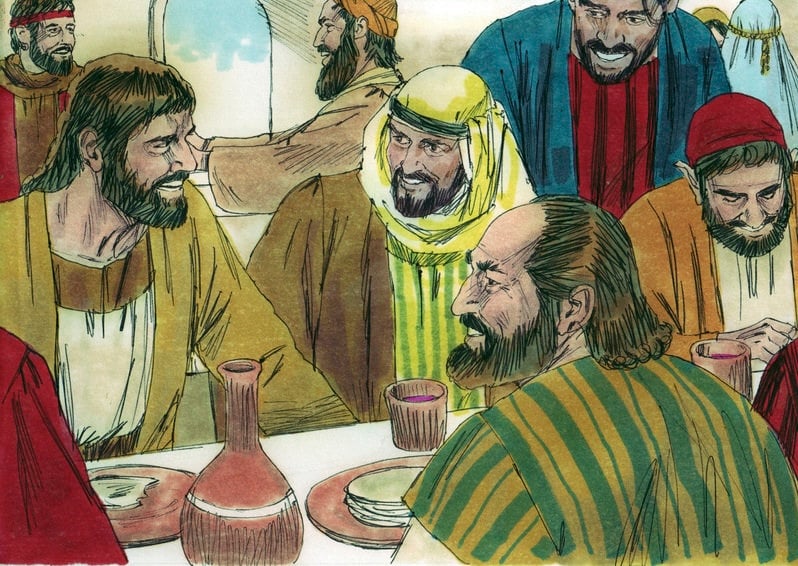
(Creative Commons CC-by-SA 3.0)
The earliest Quakers defined themselves by their commitment to strip away everything that had gone wrong with Christianity over the previous sixteen centuries and return to the faith of Jesus’s first followers.
What did they mean by that?
“God, through Christ, hath placed a Principle in every Man, to inform him of his Duty and to enable him to do it,” Penn wrote in Primitive Christianity Revived; “and that those that live up to this Principle, are the People of God, and those that live in Disobedience to it, are not God’s People, what ever Name they may bear, or Profession they may make of Religion.”
“There is no becoming virtuous, holy and good, without this Principle,” Penn continued: “no acceptance with God, nor peace of soul, but through it.” His stark language may make contemporary Friends and seekers uncomfortable. The idea that some belong to the “People of God” while others do not cuts across the grain of the inclusivity on which many modern Quakers pride themselves.
I want to engage Penn on his own terms, though, and think about the duty which God impresses upon each of us—while giving us the means to fulfill it. That leads me to thinking about the earliest Christians, the ones the Quakers wanted to emulate, as described in the texts of the New Testament. After spending several years translating those texts, the Orthodox theologian David Bentley Hart came to see that nascent religious community as “a company of ‘radicals’ (for want of a better word), an association of men and women guided by faith in a world-altering revelation, and hence in values almost absolutely inverse to the recognized social, political, economic, and religious truths not only of their own age, but of almost every age of human culture.”
What duty did those values impart upon believers?
If you’ve read my previous messages, you may have detected a steady emphasis on what Jesus called the greatest commandments: “The first is, ‘Hear, O Israel: the Lord our God, the Lord is one; you shall love the Lord your God with all your heart, and with all your soul, and with all your mind, and with all your strength.’ The second is this, ‘You shall love your neighbor as yourself.’”
The passage from Acts cited above gives us one clear indication of how that played out for the early Christians. They came together as a community, worshiping at temple in groups and opening their homes to share meals with one another. More than that, though, “they would sell their possessions and goods and distribute the proceeds to all, as any had need.”
They began laying the foundations for a society grounded in mutual aid. In the short term, as Dean Spade explains in Mutual Aid, that means filling in the gaps neoliberal capitalist institutions see no profit in filling themselves—or stepping in to provide an infrastructure of care and support when those institutions choose not just to neglect our neighbors but actively persecute them as well. We’ve seen a lot of that kind of mutual aid work in the United States recently, from community-level responses to natural disasters to the networks of resistance forming against repressive attacks on minority communities in several American cities.
Many Christians, though, feel led to look beyond the short term.
They imagine the formation of a kingdom not of this world—what the anarchist theologian Terry J. Stokes has called “the immediate renunciation of the inherently violent and domineering state, as well as the construction of something else in its place.” Spade agrees with this from a secular standpoint, arguing that states, “extraction machines designed to concentrate power and wealth” in the hands of a few, will never organize nor mobilize so as to eliminate the underclass, because oligarchs require an underclass they can exploit to sustain their greed-driven lifestyles.
The “primitive Christians,” however, didn’t distinguish between the short and long terms. As far as they knew, Jesus might come back at any moment and help them finish the job of establishing the blessed community here on earth. The first generations of Quakers felt a similar sense of urgency—think about how Margaret Fell made her home a safe haven for Friends traveling in the ministry.
And what of our generation: Do we feel the duty impressed upon us as keenly as Penn and his peers? Have we found it difficult to envision a way of living not defined by the forces that hold dominion over our culture? What might it take to jolt more souls out of their torpor and enable people to hear the call once more?
I loved this scripture when I first read it but then I read further about what happened next. Like the battle of Jericho the humans got it right for a little while then somehow went back to the old ways of slaughter supposedly ordered by God.