


So you, mortal, I have made a sentinel for the house of Israel; whenever you hear a word from my mouth, you shall give them warning from me. If I say to the wicked, “O wicked ones, you shall surely die,” and you do not speak to warn the wicked to turn from their ways, the wicked shall die in their iniquity, but their blood I will require at your hand. But if you warn the wicked to turn from their ways and they do not turn from their ways, the wicked shall die in their iniquity, but you will have saved your life.
(Ezekiel 33:7-9, New Revised Standard Version, Updated Edition)
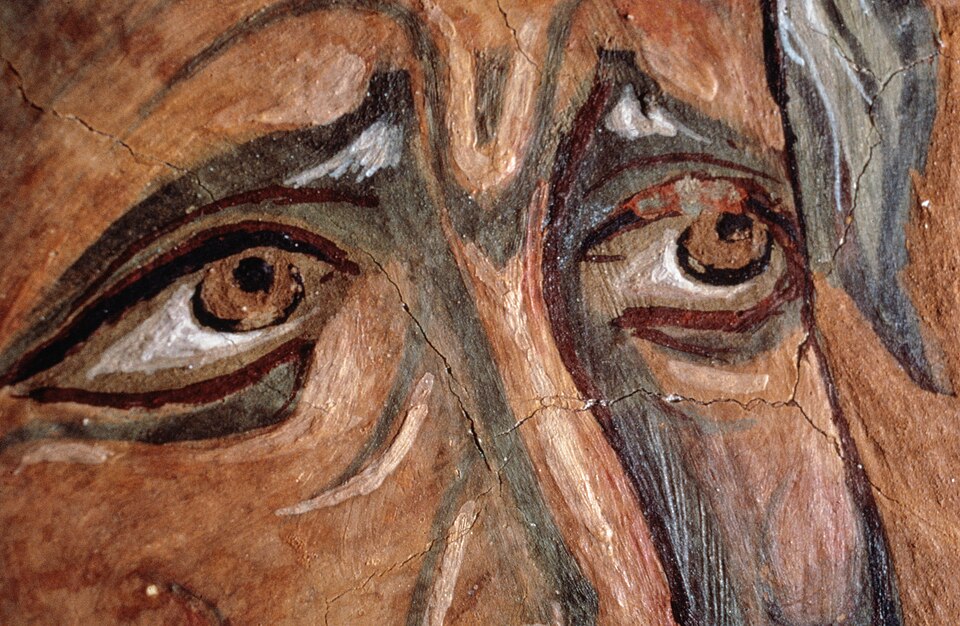
Ezekiel’s warning may chafe against many modern Quakers’ sensibilities.
Friends may not like to hear that God will condemn the wicked to die in their iniquity, sensing a conflict with their belief in a deity with nothing but love for all creation. (Or, perhaps, their belief in no deity at all.) But God does not want the wicked to die, Ezekiel tells us (33:11); nothing would make God happier than for the wicked to abandon their evil ways. Why else would God send warnings through the prophets, if not out of a desire to see humanity redeem itself?
Some may consider the tone of Ezekiel’s message too intolerant. They might even regard it as a form of hostility incompatible with the peace testimony. They read it as an implied threat that they would feel uncomfortable imposing on others—not least of all, in some cases, because they resent feeling that God has imposed it on them. They’ll say that they don’t respond well to coercive demands, that a truly loving God would never make such demands in the first place, would never resort to that kind of emotional and spiritual blackmail.
I can’t deny that people would use—have used—Ezekiel’s words to strongarm others into obedience in the name of religious authoritarianism (and even more often without naming it as such). But I don’t think we should read the message that way. God doesn’t tell Ezekiel to demand compliance from the wicked. God wants people to recognize the consequences of their actions and consciously choose a path that will not lead to death and destruction. It pains God deeply that we, made in God’s image, might do otherwise: “Turn back, turn back from your evil ways,” God cries, “for why will you die, O house of Israel?” (33:11)
And maybe some Friends don’t want the accountability God asks of us here.
“Whenever you hear a word from my mouth,” God tells Ezekiel, “you shall give them warning from me.” That holds true today as well: If God calls on us to remind those who have given themselves over to the depravities of this world where that choice will ultimately lead them, and we fail to follow that leading, we bear as much responsibility for the outcome as they do. It doesn’t matter if we didn’t want to come off as confrontational, or if we didn’t think people would listen to us anyway. We may as well have failed to throw a drowning person a lifeline, or let a drunk person leave a bar with their car keys in their hand.
I know I wouldn’t always handle myself well under such pressure, and I imagine that many among the first generation of Quakers, the generation guided by George Fox and Margaret Fell, experienced similar feelings of uncertainty and hesitation. Friends like James Nayler, though, came to understand judgment as “a gift from the Spirit of God, set in the heart of everyone who dwells in the light of Christ,” and a necessary prerequisite for the redemption of the world. “Therefore is Ezekiel so often commanded to judge them and cause them to know their abominations,” Nayler wrote in Love to the Lost:
“And Jeremiah was full of the fury of the Lord, and he was weary with holding it in. And Micah was full of power, by the Spirit of the Lord and of judgment, to declare to Jacob his transgression and to Israel his sin. And so in all ages he placed his judgments in his servants, who are to judge the heathen and such as know not God therewith; and so many as did believe it and receive it did repent and found mercy, and the rest were hardened.”
“He that spares men’s wickedness,” Nayler warned, “hates God’s righteousness.”
The spirit of judgment among early Quakers came down hard upon the political and religious establishment of seventeenth-century England. That establishment responded by drawing upon every available resource of church and state to persecute the Religious Society of Friends into oblivion. It didn’t work, no matter now many Friends they tortured or imprisoned. They even tried making it illegal for Quakers to come together in worship, but they could not extinguish the flame that prophetic imaginations like Nayler’s and Fox’s and Fell’s had ignited.
And those Friends who suffered under Puritan and then Stuart repression on account of their messages could take comfort in knowing that they had sounded the necessary alarm. “If any be moved to go to the steeple-houses, or markets, or to reprove sin in the gate, or to exhort high or low, or to reprove them,” George Fox advised, “reason not with flesh and blood, nor quench the spirit. And when ye have done, in the same spirit live; and then ye will have peace, and rest, and fellowship with God, and one with another.” They had provided fair warning to the wicked, and only the wicked could decide for themselves what would happen next.
Now, I don’t think God calls on us to run around telling people about their personal failings. We don’t fight the Lamb’s War with an army of scolds and cavilers. But neither would God want us to remain silent as the moral arc of the society around us bends further and further toward injustice. We must bring such matters into the light, as Spirit guides us, and invite people to join us as we make our way back to the blessed community.
The role of the true prophet is to both model the love of God, in the manner in which they live, and to call others to spiritual accountability to live their lives in the light of God consciousness.
Rather than invoking death, hell & brimstone on other sinners, the prophet reminds them of the cause and effects (karma) of their current way of living, and treating others, with the hope that they will choose conversion and full life.
Thanks, Joseph! I would say I agree with you about the importance of modeling the love of God, especially in terms of what we’ve explored in several messages about living in alignment with the covenant that informs the blessed community. And I’d also agree with you about the importance of calling others to spiritual accountability.
I suppose our point of discord here is that I’m increasingly convinced death is the karma of living in the way of Empire. In the sense of hastening (or at the very least courting) one’s imminent demise, not to mention contributing to the death and desolation of the world around us, but also in the sense of cutting oneself off from the blessed community and its promise of eternal life. (Whether that isolation is equal to “hell and brimstone” is also, I’d say, a matter of individual perspective.)
As a person exploring Quaker spirituality, this is the sort of teaching that would drive me away, unconditionally. I don’t think many people could successfully combine the freedom and integrity to commune with God according to one’s belief and experience with enlightenment with authoritarian Christianity via Old Testament texts.
You speak truth, Brother. God loves us more than we can imagine, so “choose this day who you will serve!”
Early Friends were very clear that the destructive nature that they confronted all around them was also found within them and they needed to find a Power that could help them overcome this nature in themselves before they could call it out in others. The difficulty I have with the use of the term “Empire” is that it is almost always used to describe something outward that is somehow “not us.” I have not found this to be true. All of the things in our society and world that are destructive and suppress the Light and compassionate parts within us, can also be found inside of us and are not simply “Empire” issues. The living Presence and Power of Jesus within us as a Light, Teacher, and Guide is a way to find a Power over these destructive forces within us and thereby challenge them around us as well. We cannot do this on our own!