



Then I said, “Here I am;
in the scroll of the book it is written of me:
I delight to do your will, O my God;
your law is within my heart.”
(Psalm 40:7-8, New Revised Standard Version, Updated Edition)
“People who come together in a spirit of blessed community—who … bear God’s law within their hearts—have what it takes to bring themselves to peaceful and abundant order.”
I wrote that two weeks ago, and in the ellipsis I mentioned that I would discuss the matter further the following week. That didn’t happen; I abandoned my planned message when I learned about the killing of Renee Good by federal officers. The verse from Psalm 40 on which I’d meant to expound still felt applicable to the situation, so I hung onto it—but now I’m ready to revisit my original intention and talk about why the blessed community renders the power structures of this world obsolete.
“How can we be made in the image of God and not be built for care, solidarity, and love?”
The anarchist theologian Terry J. Stokes poses this question in his book Jesus and the Abolitionists. God loves all of God’s creation; God created humanity in God’s image; therefore, humanity ought to love all of God’s creation. With that in mind, Stokes writes, “we were not meant to become familiar with love only to then choose supremacy.” History may show human societies choosing supremacy over and over again, but we do not have to live that way. We do not have to surrender our wills to the ideological framework the philosopher bell hooks identified as “imperialist white supremacist capitalist patriarchy,” which other observers have boiled down to “Empire.”
Some go so far as to say Christians have a clear obligation to reject that framework. “The ethical teachings of Jesus—namely, nonviolence, cooperation, and love,” Stokes tells us, “demand the immediate renunciation of the inherently violent and domineering state, as well as the construction of something else in its place.” I believe this holds true for Quakers, too—whether or not we acknowledge the divinity of Jesus, and notwithstanding whatever else we may believe about the nature of God and Spirit.
Before people called us “Quakers” in scorn, we called ourselves “Friends.” Friends of God. Friends of the Lord. Friends of Christ. Friends of the Truth. The earliest Friends traced their name back to a message Jesus gave to his disciples, recorded in the gospel of John:
“You are my friends if you do what I command you. I do not call you servants any longer, because the servant does not know what the master is doing, but I have called you friends, because I have made known to you everything that I have heard from my Father.” (John 15:14-15)
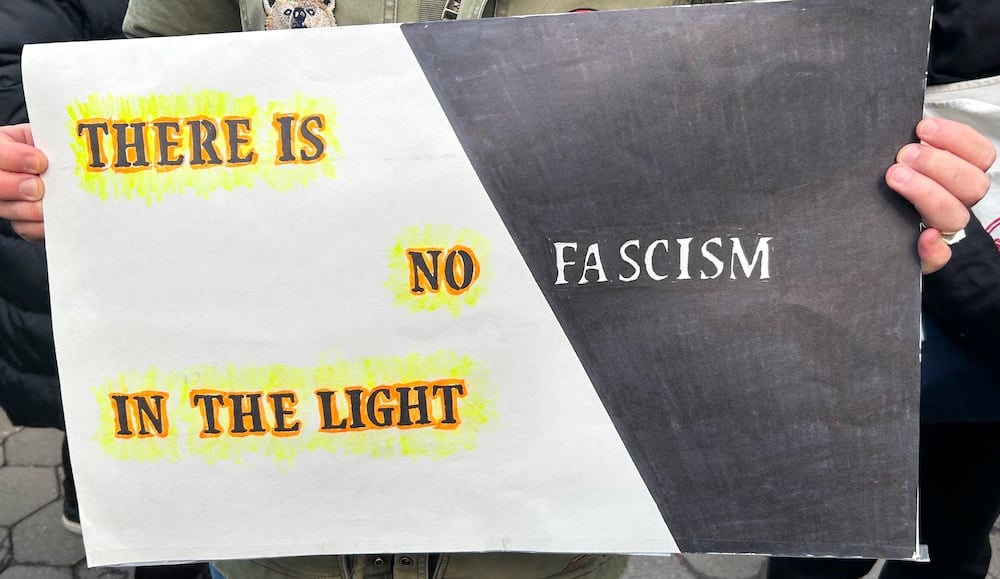
Jesus invites us to move beyond Empire’s supremacist model.
Instead of insisting on the necessity of a ruling class to administer scarce resources, the blessed community comes together in solidarity, and everyone has their needs fulfilled. In Stokes’s description, “No one is governing anyone, no one is above or below anyone else, but everyone is tasked with the work of fostering, collecting, and amplifying the voice of every individual within the collective.”
Some skeptics say human societies can’t pull that off. God assures us we can, that we already bear within us the potential to make it happen. “This commandment that I am commanding you today is not too hard for you, nor is it too far away,” Moses told the Israelites. “No, the word is very near to you; it is in your mouth and in your heart for you to observe.” (Deuteronomy 30:11,14)
Or, as early Quakers like Robert Barclay might say, every person, created in God’s likeness, possesses a “measure of Grace.” Spirit reaches out to that divine “Seed,” and when we accept the call, it transforms our consciousness. We don’t fall in line with the covenant to love God and love our neighbors as ourselves because we fear what God will do to us if we don’t. We delight to do God’s will because we recognize the rightness of the covenant’s conditions.
The beloved community doesn’t need to assert its authority by force.
It doesn’t need to send armed enforcers into the streets to shoot women in the face or to launch tear gas at infants. It doesn’t need to see your papers. It doesn’t even care about your country of origin. The beloved community has no second-class citizens. It recognizes you as a human being, and treats you like one.
That sounds to me like a better way to live than the setup Empire currently “offers” in the United States and other countries. If that makes me an anarchist, I suspect it makes a lot of other Quakers anarchists as well.
We want to hear from you, not an AI! Please be thoughtful and use your own words. Comments on Friendsjournal.org may be used in the Forum of the print magazine and may be edited for length and clarity.