 Carolina Friends Early SchoolsCarolina Friends Early Schools
CHAPEL HILL, DURHAM AND CFS MAIN CAMPUS
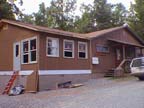
The Carolina Friends Early Schools offer half-day, full-day, and extended day programs for children ages three through six. The Chapel Hill Early School (CHES), close to the campus of the University of North Carolina, is in the new education building at the Chapel Hill Friends Meeting at the corner of Raleigh and Country Club Roads. The Durham Early School (DES), located between the East and West campuses of Duke University, occupies two connected buildings behind the Durham Friends Meeting. The Campus Early School (CES) is located on the CFS main campus on Friends School Road, off Mount Sinai Road, in Orange County.
The children meet in open classrooms which are divided into play areas and interest centers. Outside are a fenced playground, sandboxes, and a variety of sturdy, imaginative playground equipment.
PHILOSOPHY OF EDUCATION
The Carolina Friends Early Schools' philosophy of education blends the Quaker emphasis on the uniqueness and worth of each individual with the work of developmental psychologists and the legacy of traditional nursery schools. The Schools' curriculum is child-centered and play-oriented. Children learn best through play. Indeed the foundation for reading, mathematics, and other advanced cognitive skills is actually laid before age six through concrete, manipulative, sensorimotor modes of activity. The Early School's role is to provide a challenging and nurturing environment in which children may acquire this foundation through play. In such an environment children practice and learn social skills with their peers. They learn fine and large motor skills. They learn the joy of creating with art and other resource materials. They encounter the worlds of numbers, shapes, signs, letters and words, as such tools are needed to complete a project or activity. Through these experiences children reach new levels of independence and responsibility.
THE EARLY SCHOOL PROGRAM
Hours, Staffing, and Enrollment
Each Early School begins its day at 8:30 AM, five days a week, from the end of August through early June, with occasional breaks for vacations and work days. Departure times are 12:30, or 3:15, or 5:15. Carolina Friend School offers a summer program for Early School age children. (Contact the Director of Summer Programs at CFS for more information.)
Our experience and research in the field of early childhood eduation suggest that small group size and low child-to-teacher ratios are related to positive outcomes for children. According to the National Association for the Education of Young Children (NAEYC), the group size and ratio of shildren to teachers should be limited to enable individualized and age-appropriate programming.
CES has a class of 18 children, taught by two teachers with the help of Upper School community service students. CHES and DES each have a total group size of 29 children and three teachers. The configurations of groups may differ in each unit, but all three Early Schools provide time for large- and small- group activities, as well as opportunities for interaction with each age group.
Daily Schedule
The Early School program recognizes the need of young children to participate in active and quiet play as well as in larger and smaller groups. The School's conviction that young children need to make choices for themselves is reflected throughout the daily program. Supplies, equipment and other materials are available to the children for exploring the worlds of art, puppets, puzzles, manipulatives, sand and water, blocks, music, drama, games, science and nature, books, numbers, writing, etc. Also each day children gather in small groups for settling in, reading, singing, storytelling, and other activities planned by the teachers. The daily schedule includes ample time for snacks and for outside play. Music, movement, short plays, and field trips are included in the overall program too.
Family Grouping
In the Early Schools, children work and play together in mixed-age "family" groups. Such grouping, whether organized by teachers or naturally occurring in play, offers several advantages, including the following:
1. It is easier for a child to make the transition from home to school because the school environment more closely resembles the structure of a family. It is the most stable and least stressful of structures because of the continuity of teachers and children from year to year.
2. Family grouping is especially well-suited to the needs of three-year-olds because the older members of the group, having already mastered the routines and rituals of the school environment, tend to care for the younger children and take great enjoyment in teaching them. Thus, a three-year-old in a family-grouped class has many "teachers" to help her make the home-to-school adjustment.
3. Family grouping is well-suited to the needs of four-year-olds because the mixed-age factor of the group beautifully supports the uneven, highly charged growth pattern of this period in development. Four-year-olds can easily, without shame, regress to the level of a three-year-old on one day and bound ahead to the more complex level of five-year-old the next day.
4. Family grouping is well-suited to five- and six-year-olds because it affords them the opportunity to be among the most able and socially responsible members of the school. Helping younger children master skills which the older child has at least partially mastered is good reinforcement of his own learning.
5. Teachers function better in family-grouped classes because of the stimulation and variety offered by the mixed ages. They enjoy the satisfactions of following each child's growth during a three-year period. Finally, the range of abilities which the children exhibit reminds the teacher that a child cannot be treated as merely typical of an age but must be considered as a unique individual with her own timetable of development.
GUIDANCE AND DISCIPLINE
For guidance and discipline the School relies on talking to and with children, helping them to express their feelings in words and to find suitable solutions for their problems and appropriate outlets for their anger and frustrations. Our three primary rules are that we take care of ourselves, we take care of each other, and we take care of our school. When these rules are tested, the response of the staff, based on understanding rather than anger, helps a child learn how to get along with himself and others. Respectful, nurturing, and understanding interactions with adults and children help a child to develop self-discipline, problem-solving abilities, and a positive self-image.
PARENT CONFERENCES
Three parent-teacher conferences are scheduled each year. Both parents are strongly encouraged to attend each conference. Additional parent-teacher conferences may be requested as needed. The School attaches great value to close communication between parents and teachers.
TEACHERS
CFS Early School teachers have been trained in child development. They have an average of fifteen years of teaching experience among them and regularly attend continuing education workshops.
ADMISSIONS
As a reflection of its calling and philosophy, Carolina Friends School actively seeks to build a community of staff, students, and families of diverse backgrounds. CFS does not discriminate on the basis of race, religion, color, gender, sexual orientation, socio-economic background, physical handicap, or national or ethnic origin in the administration of its policies and programs.
Application for admission and for tuition aid is made through the CFS administrative offices on the main campus. Applications are received beginning in September, and applications received prior to January 15 are considered as a group for admissions decisions that are made in late March. There is some flexibility in 2001 due to old applications that said Feb 1. Limited tuition aid is available for children who cannot attend the School without financial assistance. Tuition aid forms are available in the main office.
MAIN CAMPUS LOCATION:
4809 Friends School Road
(Off Mt. Sinai Road)
Durham, NC 27705
(919) 383-6602 or (919) 929-1800
Revised August,1998
 Back to CFS Main Page